What it really costs
Not a range so wide it means nothing. Set your size, specification and region below and see a real number, then read the line by line breakdown behind it.
These are Extnd estimates from recent UK project costs, not official statistics. A planning range, not a quote.
Get your cost in 60 seconds.
Pick your house, shape the extension, and get a cost estimate and a planning verdict together, before you speak to anyone.
Open the Project Calculator 60 seconds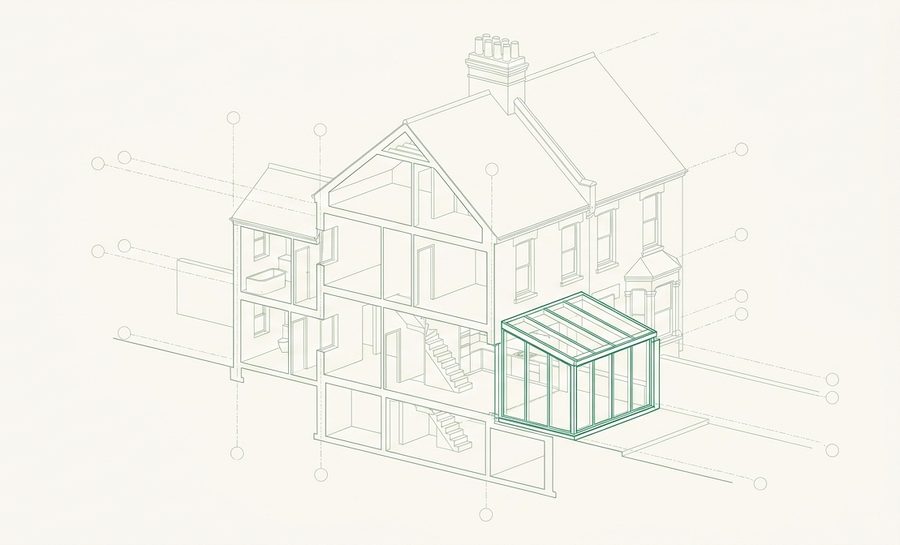
Every project type, side by side
The bar is the usual range. The dot is where most projects land.
The fees that turn up after you have said yes
Not part of the build cost, and rarely in the first quote. All three are normal, all three are avoidable surprises.
Party wall surveyor
£900 to £2,500 per neighbour, or nothing at all if they consent in writing. Serve notice early.
See the breakdown → Fee · per projectStructural engineer
£600 to £2,500 for the beam calculations building control will ask for before the steel goes in.
See the breakdown → Fee · per projectBuilding regs drawings
£1,500 to £4,000 for the technical pack. Separate from planning drawings, and never optional.
See the breakdown →Pick your project
 12 to 18 weeks on site
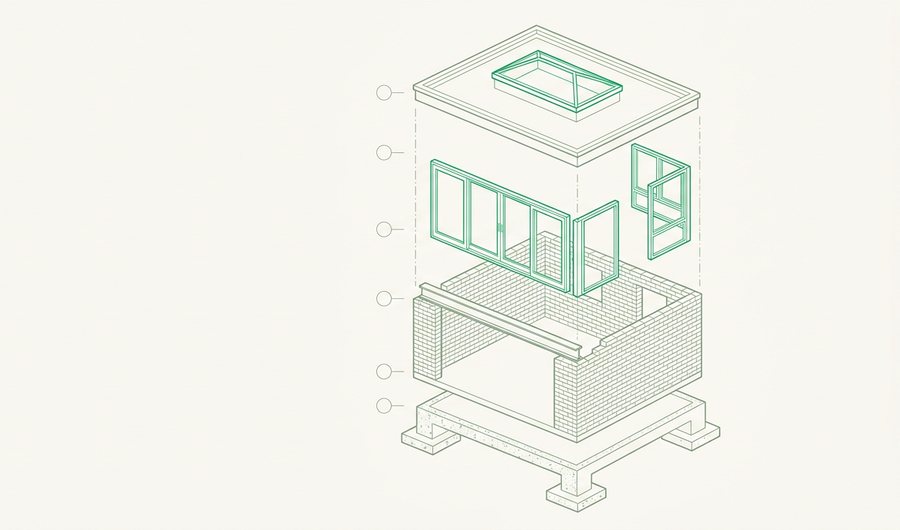
Single storey rear extension
The most common project in the UK. Price is driven by depth, glazing and whether the kitchen moves.
£42,000 to £95,000 →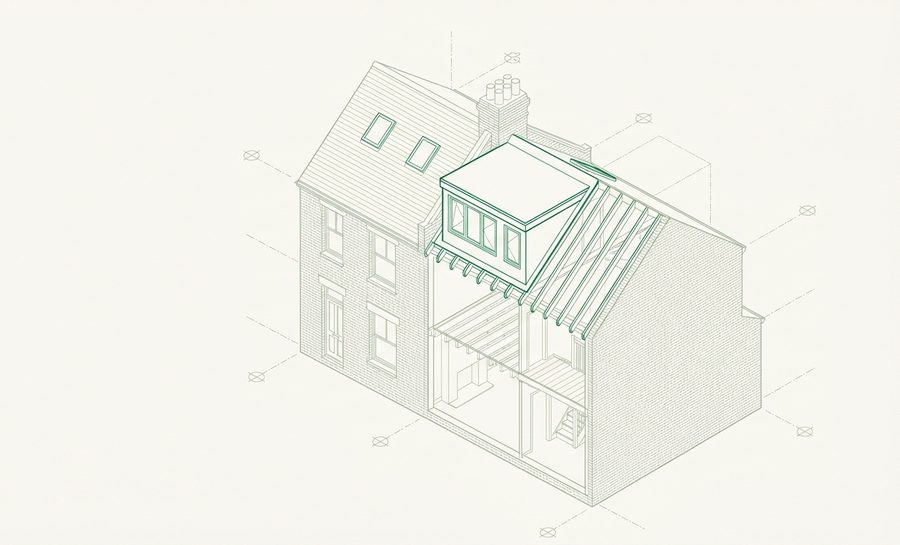 8 to 12 weeks on site
Loft conversion
Cheapest way to add a bedroom because the roof and floor already exist. Dormer type sets the price.
£38,000 to £90,000 → 12 to 16 weeks on site
Side return infill extension
The narrow alley beside a Victorian terrace, brought inside. Usually transforms a dark kitchen.
£45,000 to £98,000 → 16 to 24 weeks on site
Two storey rear or side extension
Better value per square metre than single storey, because you only pay for one roof and one set of foundations.
£70,000 to £175,000 → 16 to 22 weeks on site
Wraparound side and rear extension
Side return and rear extension combined. Almost always needs planning permission rather than permitted development.
£65,000 to £145,000 →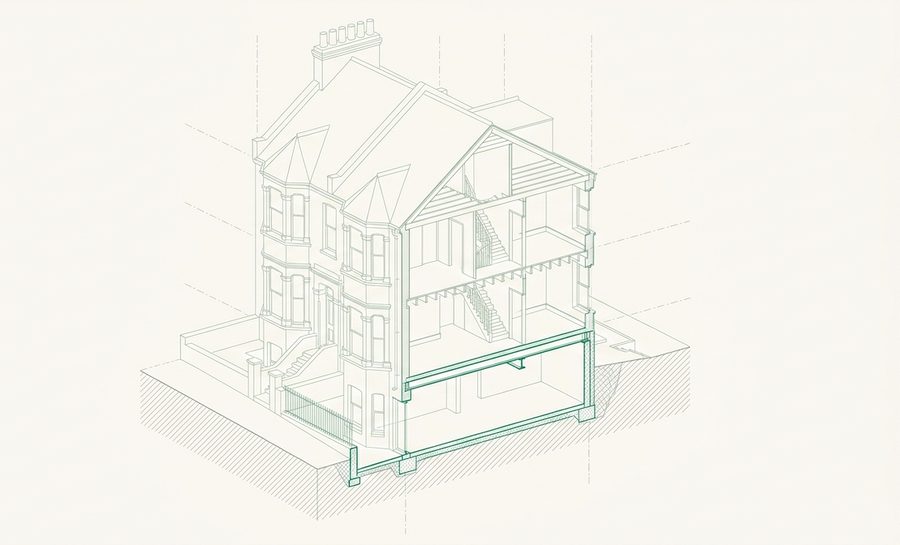 20 to 32 weeks on site
Basement conversion or dig out
The most expensive way to add space. Underpinning and waterproofing dominate the budget.
£95,000 to £320,000 →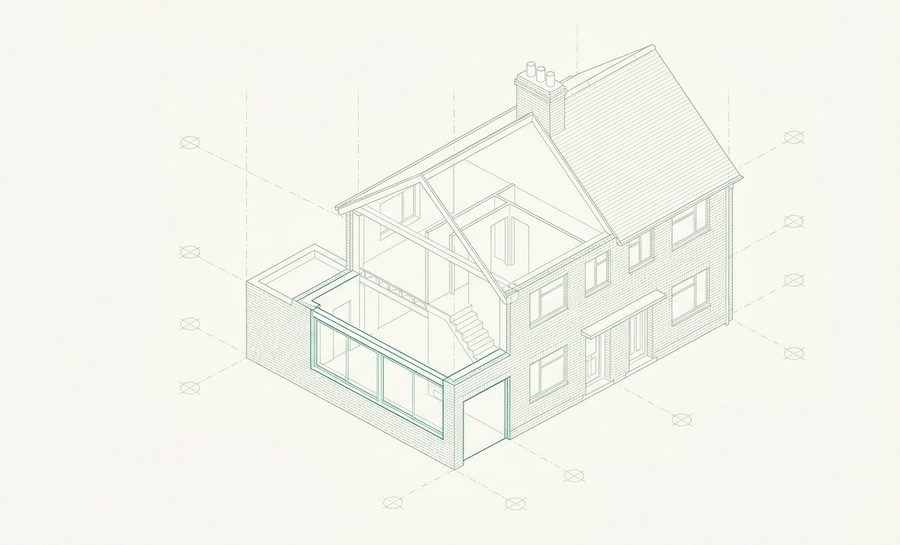 4 to 8 weeks on site
Integral garage conversion
The cheapest room you will ever add, because the structure and roof are already there.
£14,000 to £38,000 →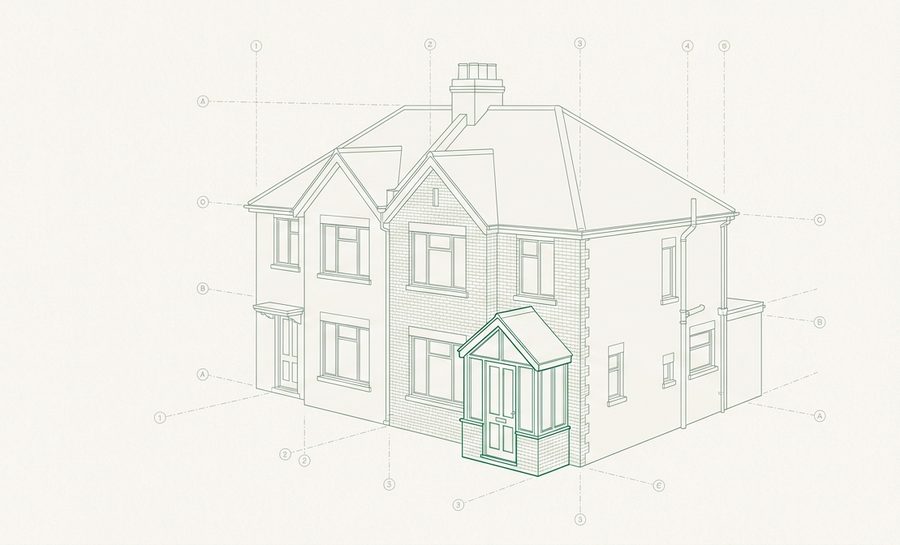 3 to 6 weeks on site
Front porch extension
Small, quick and usually permitted development if you stay under three square metres.
£6,500 to £22,000 →Common questions
How accurate is the extension cost calculator?
It is a planning range, not a quote. The model separates the costs that do not scale with size, like drainage, structural openings and professional fees, from the ones that do. That is why it gives a more honest answer than a flat rate per square metre, which always overprices small projects and underprices large ones.
What does an extension cost per square metre in the UK?
Between roughly 2,200 and 3,400 pounds per square metre for a good standard single storey extension, and more in London. Per square metre is a blunt tool though. A 12 square metre extension and a 35 square metre one carry almost the same drainage and steelwork bill.
Why are quotes for the same job so different?
Usually because they are not the same job. One includes the kitchen, one does not. One assumes standard doors, one assumes slim framed sliders. Compare specifications before you compare prices, and be suspicious of anything more than fifteen per cent below the others.
How much should I hold back as contingency?
Ten per cent on a straightforward extension, fifteen on an older property or anything involving groundworks you cannot see. The most common overspend is not a surprise, it is a change of mind midway through, which is why the design stage matters so much.
Is it cheaper to extend or to move?
Extending almost always wins on cost. Stamp duty, agent fees, legal costs and removals on a typical UK move comfortably exceed a well judged extension, and you keep the house, the street and the school catchment. The exception is when the house simply cannot take what you need.